The Power of the Tongue
The tongue is made up of eight different muscles that work together to give it incredible flexibility and control. It’s filled with taste buds that detect different flavors, and it has direct connections to the brain’s pleasure and emotional centers. This makes the tongue not just a sensory organ but also a key player in emotional and intimate experiences.
The Unique Role of the Tongue
Beyond its role in eating and speaking, the tongue is central to our ability to express emotions physically. It’s an organ that is capable of subtle movements and touches, which can convey a lot about a person’s emotions and state of mind. This is particularly evident in activities such as kissing, where the tongue becomes a tool for expressing affection, passion, and connection.
What Is a Tongue Kiss?

A tongue kiss, also known as a French kiss, occurs when two people kiss and their tongues touch and explore each other’s mouths. Unlike a simple peck, a French kiss involves a deeper, more passionate exchange that often carries emotional and romantic significance. This type of kiss has become one of the most popular and intimate forms of physical affection.
The Intensity of a Tongue Kiss
A tongue kiss is often seen as more intense than other types of kisses because it involves not only physical intimacy but also emotional vulnerability. It’s a way for people to connect on a deeper level, expressing trust and affection. The act of intertwining tongues can heighten feelings of desire and emotional closeness, making it a powerful expression of romance and love.
What Happens in the Body During a Tongue Kiss?
Chemical Exchange
When two people kiss with their tongues, they exchange saliva. While this might seem unromantic at first glance, the saliva contains hormones and pheromones that can have a significant impact on the emotional and physical connection between the two individuals. These chemical signals can enhance feelings of attraction and connection.
Brain Activation
A French kiss stimulates multiple parts of the brain, including those linked to desire, bonding, and memory. The brain’s pleasure centers are activated, making the kiss feel not just physical but also deeply emotional. This neurological response is one of the reasons why kissing is often such a powerful and unforgettable experience.
Oxytocin Release
One of the most important hormones released during a tongue kiss is oxytocin, often referred to as the “love hormone.†Oxytocin plays a crucial role in promoting bonding and trust between individuals. It fosters a sense of connection, warmth, and intimacy, making the kiss even more significant and meaningful. This hormonal release helps strengthen emotional bonds, deepening the relationship between partners.
Heart Rate and Breathing Increase
During a passionate kiss, your heart rate and breathing can increase significantly. This is your body’s natural response to the excitement and emotional arousal caused by the kiss. The physical sensations you experience during a tongue kiss are closely linked to the emotional intensity of the moment.
Immune Boost?
Interestingly, some studies suggest that swapping saliva during a kiss may help boost the immune system. This is because when you exchange saliva, you’re exposed to new bacteria in small, safe doses, which could help strengthen your body’s natural defenses over time. This may seem surprising, but it’s just one of the many hidden benefits of this intimate act.
Emotional and Psychological Impact of a Tongue Kiss

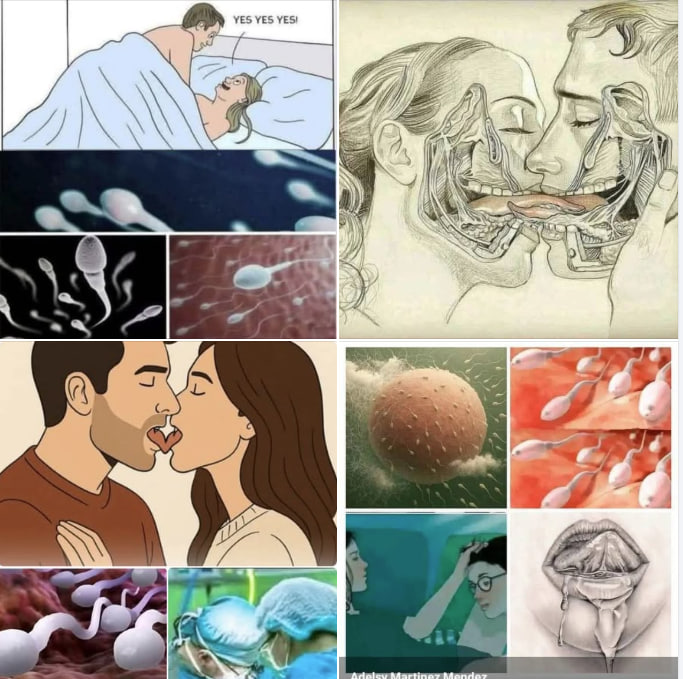
The collage of images you present combines humorous, artistic, and scientific illustrations related to human sexuality, affection, intimacy, and the reproductive process. At first glance, it seems like a somewhat chaotic mix: caricatures of couples kissing or having sex, anatomical drawings, microscopic representations of sperm and eggs, and symbolic scenes that evoke the emotional connection between two people. However, when analyzed as a whole, the content raises a very interesting theme: the way society visualizes, interprets, and represents sexuality and the human bond.
On the one hand, some images lean towards graphic humor or memes, using exaggerations or simplifications to provoke laughter or surprise. On the other hand, we find anatomical representations that show the inside of the body during a kiss or the cellular interaction in reproduction. There are also touches of romanticism: illustrations of couples kissing tenderly. Thus, what at first glance seems like a collage without a unified theme, actually becomes a visual journey into how we view sex, love, intimacy, and biology.
Gift Baskets
One of the most evident themes is the duality between sexuality as an emotional and human act versus sexuality as a biological phenomenon. The images of sperm and eggs, for example, refer to the strictly reproductive aspect, a microscopic, mechanical, and biological process. In contrast, the images of couples—especially those showing kissing—highlight the emotional, affective, or even social aspect of the sexual act. In our culture, these two planes often coexist, but they are not always understood as parts of a whole.
The illustration of the faces kissing with a “cutaway” view of the inside of the mouth is particularly striking. This kind of anatomical drawing can be unsettling or fascinating, depending on the viewer’s sensitivity. This type of art often serves as a reminder that the most intimate acts are, at the same time, physiological processes. A kiss is both an emotional exchange and a highly complex physical interaction: it involves facial muscles, salivary glands, sensory systems, and a neurochemical response that can activate emotional bonds or intensify attraction. The anatomical images underscore the material aspect of the experience, contrasting with the romantic and symbolic aura we usually attribute to it.
Another interesting element is how the collage juxtaposes the idealized vision of love and sexuality—represented in drawings of beautiful couples with gentle and harmonious gestures—with biological reality, where millions of cells compete, travel, fuse, or fail. The difference between these two levels can be abysmal: the intimate act can be experienced as an expression of connection and pleasure, while at the microscopic level, a sequence of biochemical processes simply occurs. This contrast invites reflection on how we interpret our experiences and how we imbue them with meaning.
From a social point of view, this type of image reflects how digital culture freely mixes the scientific, the humorous, and the intimate. The internet has democratized visual sexuality: now we not only consume images, but we also remix, comment on, and reinterpret them. The collage you present is an example of this phenomenon, where elements that previously belonged to very separate contexts—anatomical art, visual anthropology, romantic illustration, memes, sex education—come together in the same space. This mix allows us to observe how sexuality is surrounded by myths, curiosity, humor, taboos, and fascination.
Online painting courses
Another relevant aspect is the role of humor in how people process intimate topics. Some of the images in the collage clearly aim to provoke laughter: caricatures, exaggerations, simplified situations. Humor acts as a bridge between the private and the public. Many people feel embarrassed to talk directly about sex, but they have no problem sharing memes or cartoons that refer to the topic indirectly. This can serve to normalize conversations, reduce tension, or break taboos; however, it can also generate misunderstandings if humorous representations replace serious sex education. The presence of sperm, eggs, and fertilization scenes points to another theme: reproduction as one of the most fundamental aspects of human biology, but also as something that is culturally laden with meanings, social pressures, and expectations. Human reproduction is not just a biological process: it is also a symbolic, emotional, and social event that can be surrounded by profound decisions, desires, fears, or even personal conflicts. The collage…